The poetry of Yevgeny Dolmatovsky, who, along with other members of the USSR Writers’ Union, was “deployed” to Latvia in 1940, reflects a deliberate cultural mission. Their task was to kickstart the creation of Soviet Latvian literature—literature designed to smooth over the questions of “reunification” and to pacify a population whose memories were tense and restless. This was literature as social engineering, an attempt to reshape collective consciousness through verse.
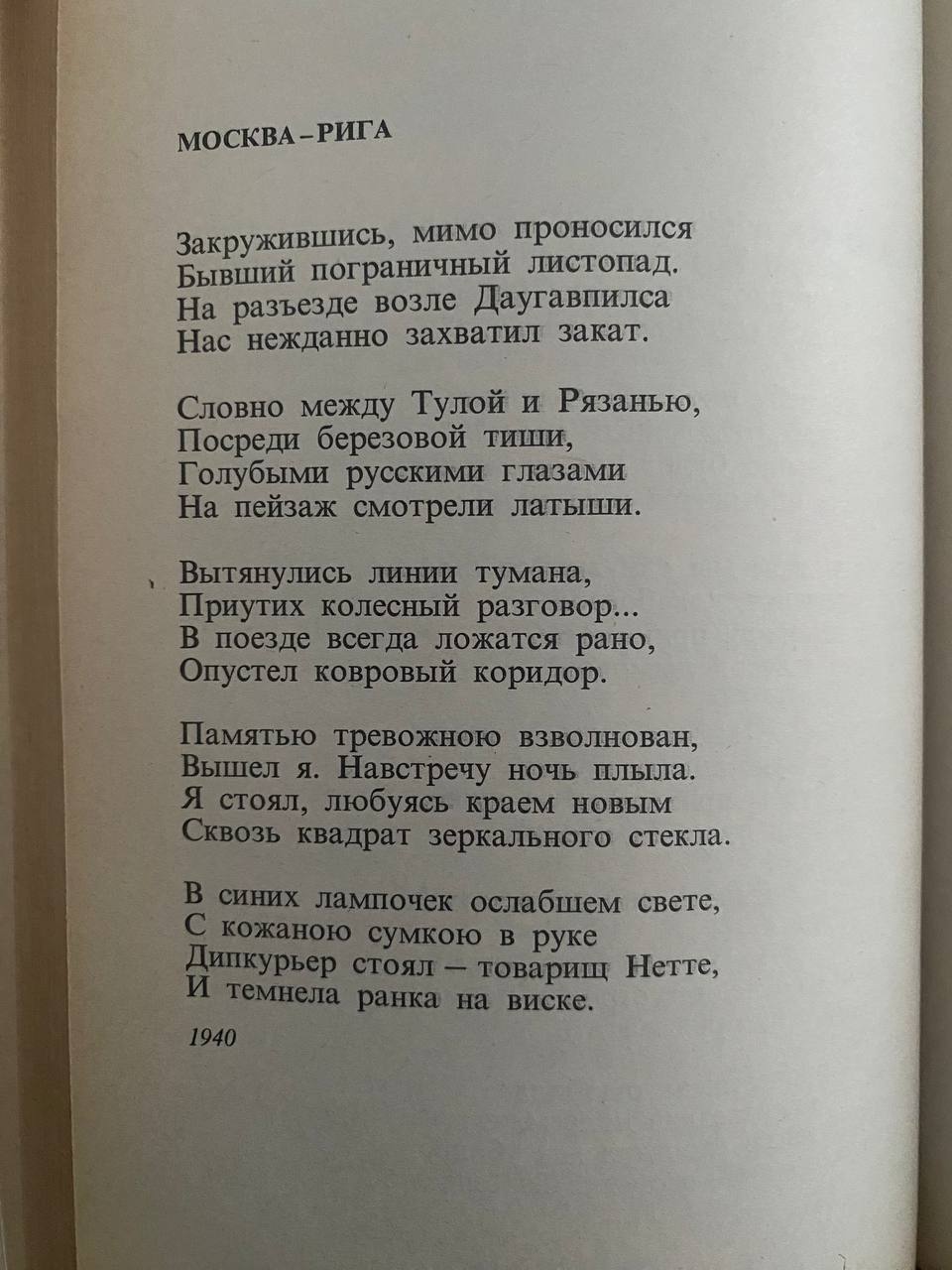
And Comrade Nette was the predecessor of Adam Johann von Kruzenshtern—a Russian admiral and explorer of Swedish and Baltic German descent—whose Russian name (Ivan Fyodorovich) and steamer-like appearance is familiar to any late- and early post-Soviet kid thanks to mailman Pechkin.
However, it all began like this:
Vladimir Mayakovsky
“To comrade Nette — steamer and man”
Not in vain I start.
        No ghost-talc rubbish, reader.
Through the harbour’s molten sunshine,
        past the jetty
steams
        the very self
                of Comrade THEODORE
NETTE.
Yes, it’s he;
        all in a hurry to arrive,
through those lifebuoy-saucer spectacles
                he looks.
“Hullo, Netted
        How I’m glad that you’re alive
with the smoking life of funnels,
        ropes
                and hooks.
Pull up here!
        I hope it's not too shallow.
Tired,
        I fancy,
                boiling all the distance from Batum.
Once you were a man. . . .
        Remember,
                dear old fellow,
the tea that on a train we would consume?
One eye cocked
        towards your red-sealed cargo,
nights on end,
        while others snored away
about old Romka Yakobson
        you’d argue,
memorising poems
        in your funny way.
Off you’d drop at dawn.
        Is that revolver there?
Better mind their business,
        if they’re wise!
Could I think
        that only in a year
I should meet you
        in this cargo-steamer guise?
There’s the moon come up.
        A stirring sight, I’ll say!
Slashing space in two,
        astern she’s looming;
as if, it seems,
        from that last battle in the passageway
your deathless hero-track
        were trailing,
                blood-illumined.
Your print-and-paper communism’s not believed so readily.
“Balloney, boy!
        It’s true in books alone.”
But things like these
        will show you communism bodily
transforming “fancies”
        all at once
                to flesh and bone.
We live under a pledge
        that grips in iron unity, —
no crucifix will nail,
        no guns on earth will crush us, —
that’s for humanity
        to live in one community,
not in a world all parcelled into Latvias
        and Russias.
Blood
        runs in our veins,
                not lukewarm water.
Marching
        through revolver bark and blast,
when we die,
        it’s to become immortal,
cast in steamers,
        verse
                and other things that last.
I could forge ahead
        through years and years,
but when life is done,
        there’s nothing better
I should wish
        than meet the end
                when my time nears
in the way
        that death was met
                by Comrade Nette
Translated by Dorian Rottenberg
To know more about Dolmatovsky’s role and construction of Soviet Latvian identity check the paper by Žans Badins