Inga Pērkone, professor at the Latvian Academy of Culture, director of the Latvian Film Museum, and one of the most prominent scholars of Latvian film history, recently attended Apple Blossoms in the River, Alvis Hermanis’s new stage production that attempts—through performance—to resurrect Aivars Freimanis’s 1974 classic. It ia emblematic, that Pērkone points out the production’s disconnection both from the fifty-year-old film and from the current political climate in the region, shaped by escalating international tensions. She attributes this to a weakness in the play itself, in which once-iconic sex symbols, now older, strain to embody a narrative void through visibly theatrical, but largely empty, gestures.
Yet is this not, in fact, symptomatic of a broader cultural reluctance to confront this rupture from the position of a colonized subject? The re-establishment of state independence is often narrated as a clean restoration of the Baltic countries to the historical trajectory interrupted in 1940 with the Soviet occupation. But the trauma of colonization continues to gape open, no matter how insistently it can be ignored. This, it seems to me, is precisely what Pērkone highlights when she implicitly warns the odious Hermanis against filling this discursive void with a product shaped by a new imperial power.
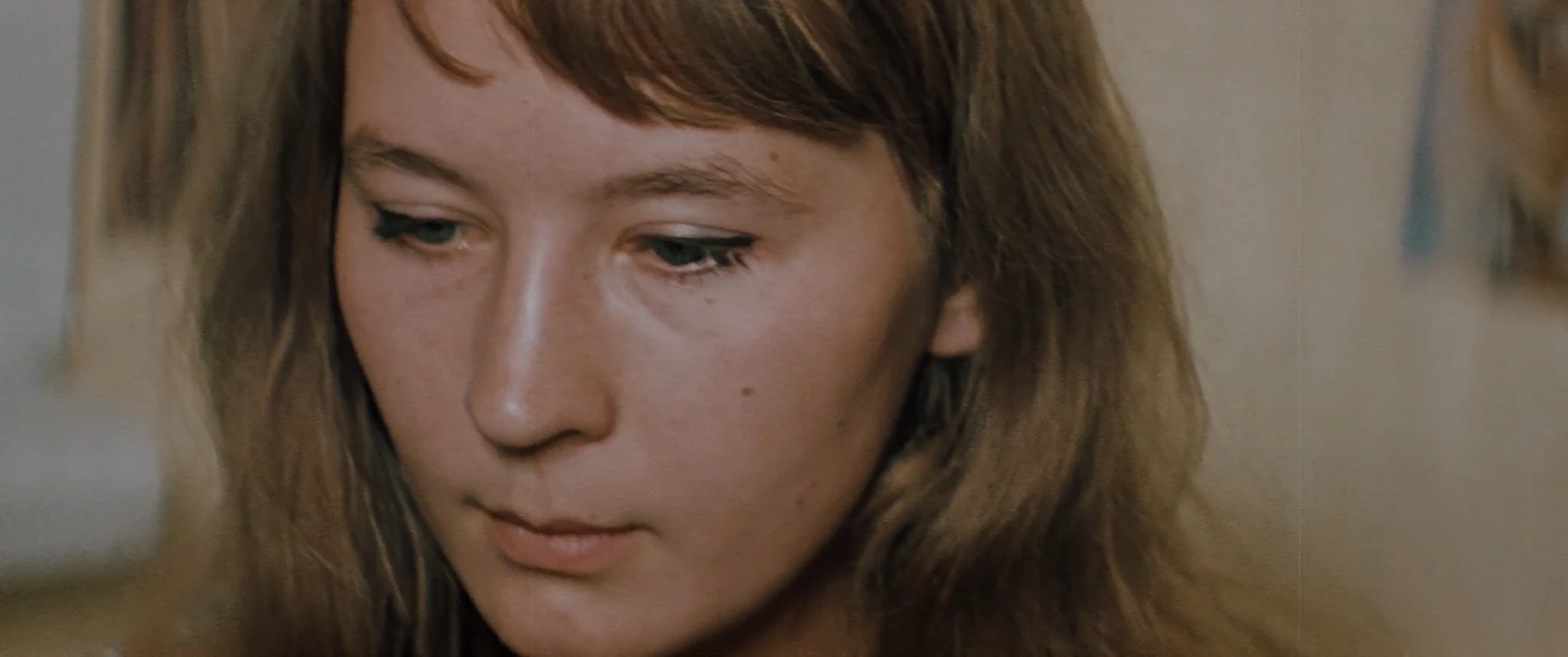
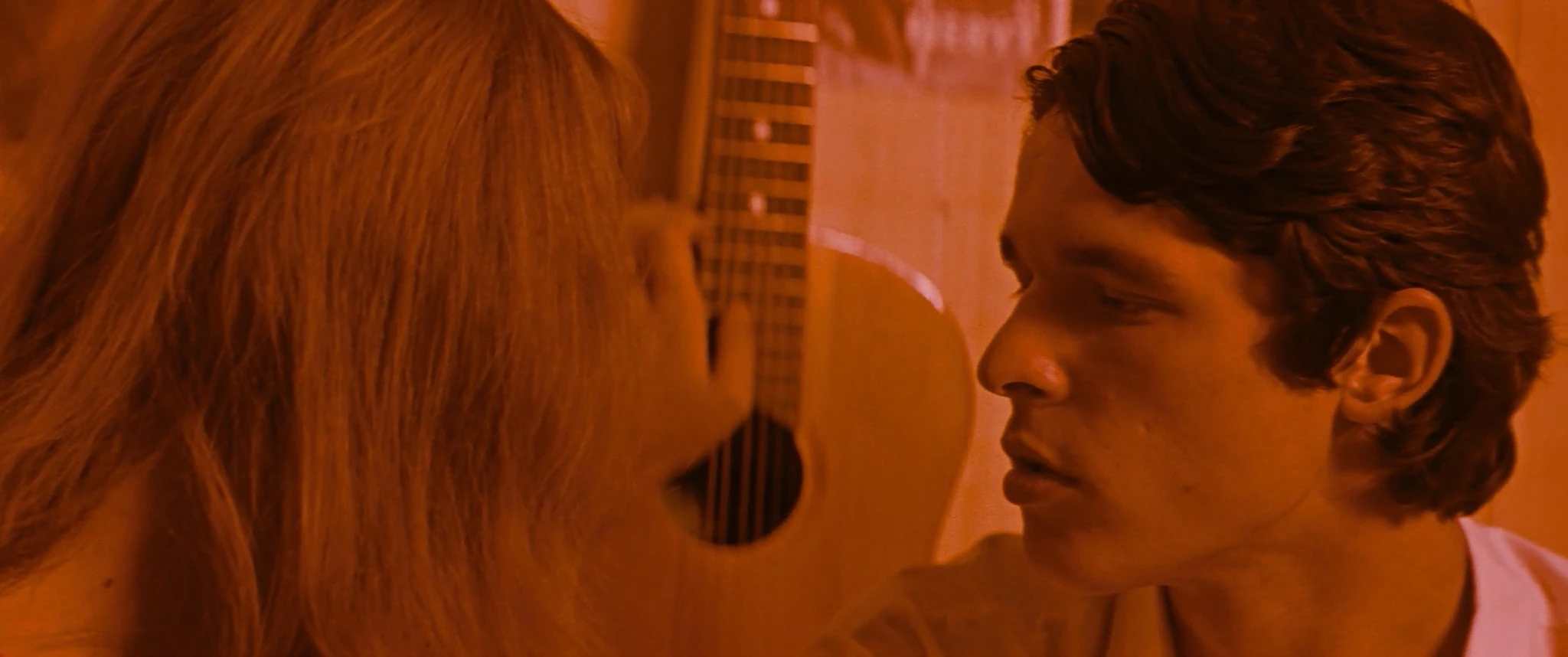
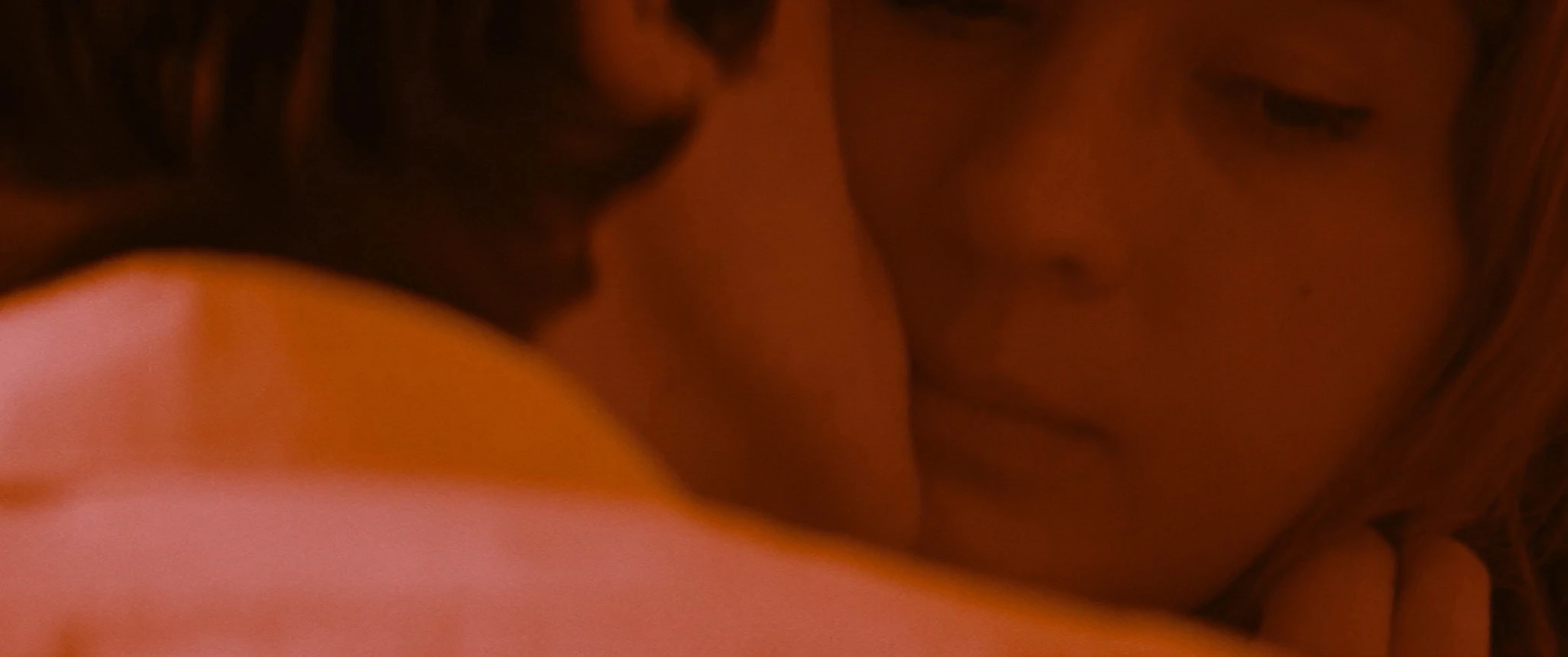
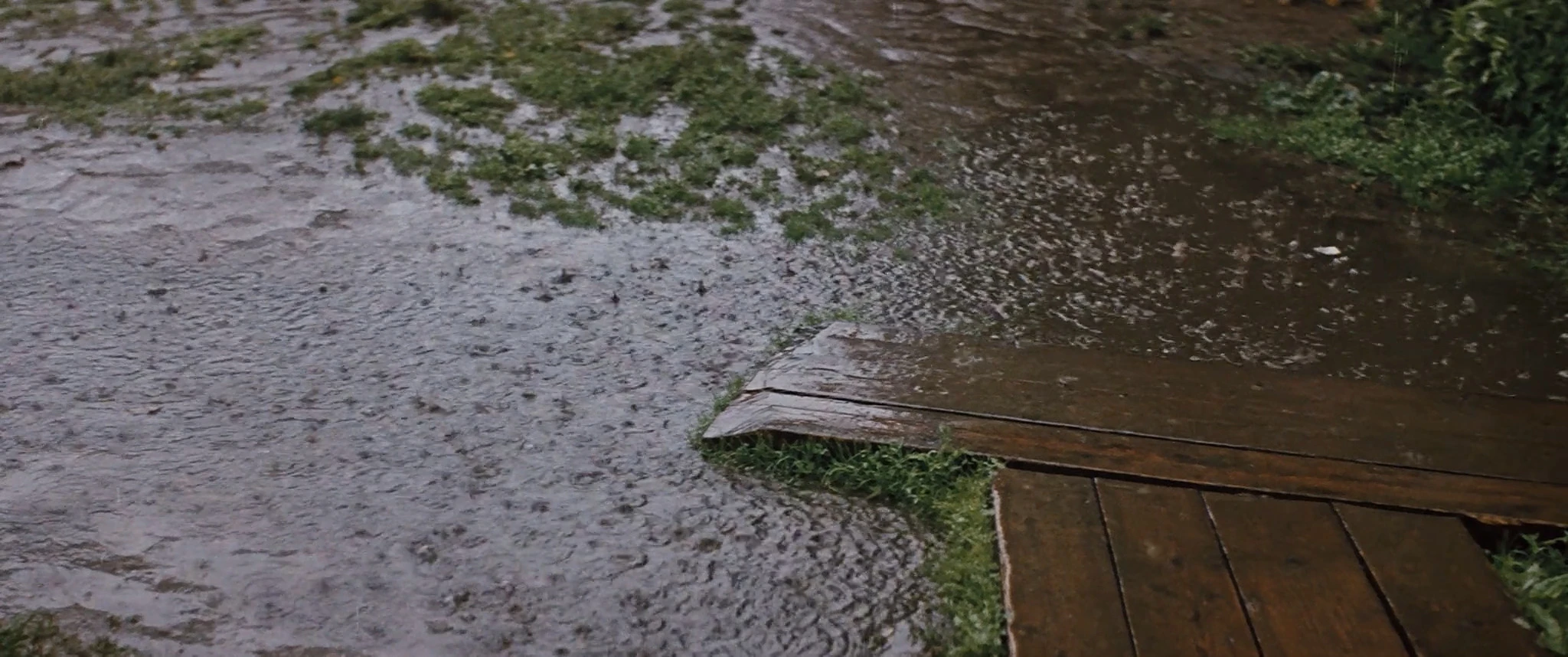
Meanwhile, Freimanis’s remarkable film was also, arguably, the first late-Soviet film to depict a real orgasm on the big screen! Here is that scene, and the restored film with English subtitles is available at filmas.lv

Ābols upē, 1974